
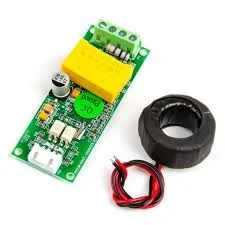
PZEM-004T AC Voltage Current
Turn AC power into a colorful learning experience. Real‑time voltage & current data visualized with vibrant light cues.
+0 points earned
PZEM‑004T AC Voltage & Current Sensor (Light & Color Sensors Category)
The PZEM‑004T is a compact, easy‑to‑use AC power‑monitoring module that measures line voltage (0‑260 V), current (0‑100 A), active power, energy consumption, frequency and power factor. Housed in a rugged, PCB‑mounted case with a clear LCD display, it connects to any micro‑controller (Arduino, ESP32, Raspberry Pi Pico, etc.) via a simple UART or Modbus‑RTU interface. Although it belongs to the Light & Color Sensors family for its ability to feed real‑time data into visual projects, its true power lies in turning abstract electrical concepts into tangible, observable phenomena.
With the PZEM‑004T, students dive deep into STEAM learning: they model electrical circuits, collect and graph real‑time voltage/current waveforms, calculate energy usage, and program visual feedback (LED strips, OLED displays, or color‑changing light panels) that reacts to power fluctuations. The hands‑on experience reinforces physics (Ohm’s law, power factor), mathematics (data analysis, unit conversion), engineering (circuit design, sensor integration), and art (dynamic lighting installations that illustrate energy flow).
Key Features
- Wide measurement range: 0‑260 V AC, 0‑100 A AC (with optional shunt)
- High‑resolution UART/Modbus output (9600 bps) for easy data logging
- Built‑in LCD for stand‑alone monitoring
- Low‑cost, plug‑and‑play wiring (three‑wire connection)
- Self‑calibration and temperature compensation for reliable classroom use
Why It’s Perfect for STEAM Education
The PZEM‑004T bridges the gap between theory and practice, letting learners visualize invisible electrical energy as vivid light patterns or color changes. Its open‑source libraries and cross‑platform compatibility encourage coding, data science, and creative storytelling, all while fostering critical thinking about energy efficiency and sustainability. By integrating power sensing with light‑based projects, students gain a holistic, interdisciplinary experience that sparks curiosity and prepares them for tomorrow’s tech‑driven world.