
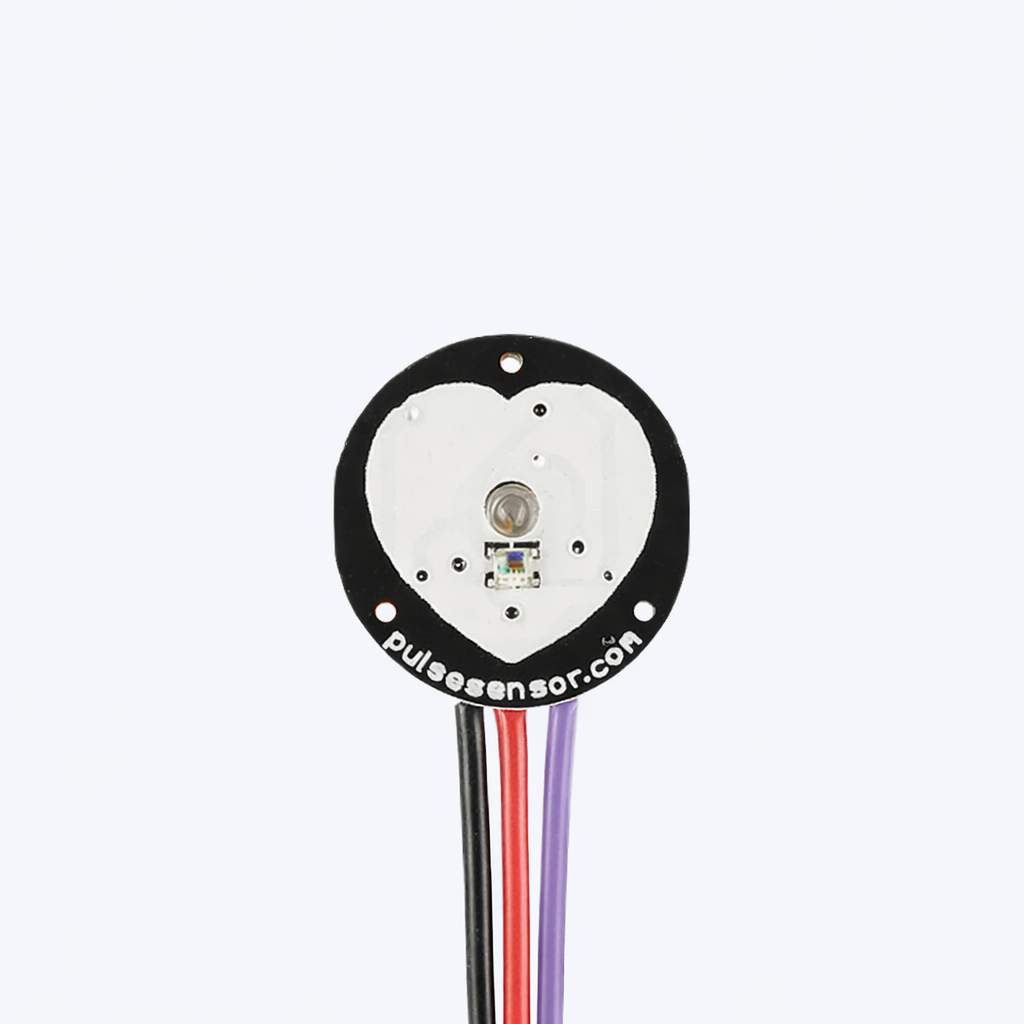
Pulse Sensor
Turn heartbeats into data-driven discovery with the Pulse Sensor for STEAM.
+0 points earned
Pulse Sensor – Biomedical Sensor Kit
The Pulse Sensor is a compact, low‑cost optical heart‑rate monitor that snaps onto any Arduino‑compatible board or micro‑controller. Using an infrared LED and photodiode, it detects the subtle changes in blood volume that occur with each heartbeat and outputs a clean, analog signal ready for real‑time visualization or data logging. Designed for classroom and maker‑space use, the sensor comes with a sturdy breadboard‑compatible breakout, a USB cable, and a step‑by‑step guide that walks students through wiring, calibration, and basic signal processing.
With this kit, students explore the fundamentals of physiology, signal acquisition, and data analysis. They’ll learn how to:
- Translate raw photoplethysmography (PPG) data into beats‑per‑minute (BPM) using simple code.
- Apply digital filtering techniques to remove noise caused by motion or ambient light.
- Visualize heart‑rate trends on a laptop, smartphone, or LCD screen and compare them to exercise or stress levels.
- Integrate the sensor into larger STEAM projects: such as fitness trackers, bio‑feedback games, or remote health‑monitoring systems, while practicing coding, circuit design, and scientific reporting.
Key features include a 0‑5 V analog output, built‑in noise‑reduction circuitry, a flexible mounting clip for fingers or earlobes, plug‑and‑play compatibility with Arduino, Raspberry Pi, and ESP32, and comprehensive curriculum modules aligned with NGSS and AP Biology standards. Its open‑source library and example sketches let students move from “Hello, world!” to sophisticated data‑science projects in minutes.
Because the Pulse Sensor bridges biology, engineering, mathematics, and art, it’s an ideal STEAM tool: students experience real‑world biomedical engineering, practice coding and circuit design, analyze quantitative data, and unleash creativity by turning heart‑beat signals into music, visual art, or interactive games. The hands‑on, interdisciplinary experience sparks curiosity, reinforces cross‑subject connections, and prepares the next generation of innovators in health tech.