
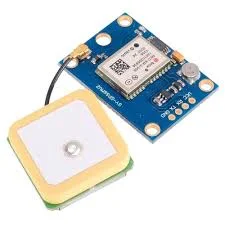
NEO-6M GPS Module with EEPROM
Explore GPS navigation and EEPROM data storage in one module; ideal for hands‑on STEAM learning!
+0 points earned
NEO‑6M GPS Module with EEPROM – Modules Category
The NEO‑6M GPS Module with built‑in EEPROM is a compact, high‑precision positioning engine that plugs directly into any Arduino, Raspberry Pi, or micro‑controller board. It receives real‑time satellite data from the global NAVSTAR constellation and stores critical configuration files in its 4 KB EEPROM, so your projects can retain settings and waypoints even after power loss. Ideal for robotics, drones, weather balloons, and geographic data logging, this module brings true location awareness to the classroom without the need for external shields or complex wiring.
Students using the NEO‑6M will master serial communication (UART), learn how to parse NMEA sentences, and explore concepts such as coordinate systems, time‑synchronization, and data persistence. The module’s on‑board EEPROM opens lessons in low‑level memory management, while its easy‑to‑use library support encourages rapid prototyping of mapping, tracking, and geofencing applications. With clear documentation and a 3‑pin interface, learners can focus on creative problem‑solving rather than hardware hurdles.
Key Features
- High‑sensitivity GPS receiver (up to 50 Hz update rate)
- Built‑in 4 KB EEPROM for waypoint and configuration storage
- 3‑pin (VCC, GND, TX) UART interface, compatible with 3.3 V & 5 V systems
- Power‑saving “standby” mode for battery‑operated projects
- Compact 16 × 12 mm footprint, pre‑soldered header for rapid prototyping
Why It’s Perfect for STEAM Education
The NEO‑6M bridges hardware and software, giving students a tangible way to apply math (lat/long calculations), science (satellite geometry), technology (serial protocols), engineering (circuit design), and art (interactive maps and visualizations). Its reliable performance and low cost make it a go‑to platform for interdisciplinary projects that inspire curiosity, foster collaboration, and prepare learners for the geospatial technologies shaping tomorrow’s world.