
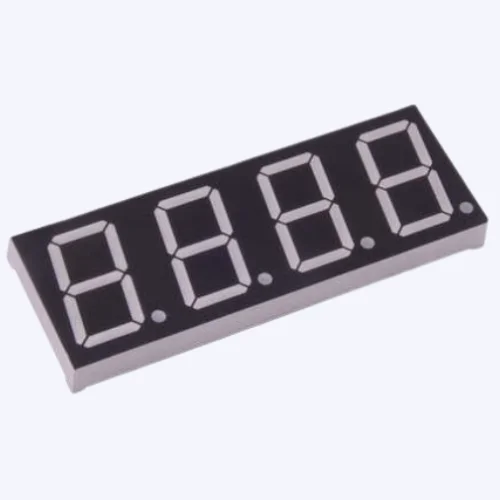
4-Digit 7-Segment LED Display for Arduino
Brighten coding lessons with a 4‑digit 7‑segment LED display, perfect for Arduino STEAM projects!
+0 points earned
4‑Digit 7‑Segment LED Display for Arduino – a compact, bright, common‑anode module that plugs straight into any breadboard and connects to an Arduino with just four digital pins (or via a simple shift‑register). Each of the four digits is made up of the classic seven‑segment layout plus a decimal point, allowing you to show numbers from 0000 to 9999, simple timers, scores, sensor readings, or custom alphanumeric codes. The display is built from low‑power, high‑visibility LEDs that stay bright in dim classrooms or well‑lit labs, and it comes with a clear wiring diagram and ready‑to‑use Arduino libraries.
What students will learn – By wiring and programming this module, learners practice circuit design, digital I/O control, and data multiplexing. They’ll write code to convert raw sensor data into human‑readable numbers, explore binary‑to‑decimal conversion, and experiment with timing functions like millis() and interrupts. The project naturally extends to concepts such as state machines, PWM dimming, and communication protocols when paired with shift registers or I²C expanders.
Key Features
- Four 7‑segment digits + decimal points (common‑anode)
- 2 mm pitch, 0.5 W per digit, visible from >2 m
- Simple 4‑pin interface (or 8‑pin for direct control)
- Compatible with Arduino Uno, Nano, Mega, and compatible boards
- Comes with Arduino library, example sketches, and a full schematic
Why it shines in STEAM education – The display turns abstract numbers into instantly recognizable visual feedback, bridging theory and tangible results. It encourages iterative design, problem‑solving, and creativity as students customize games, countdowns, or data dashboards. Because it integrates electronics, coding, mathematics, and design thinking in a single, affordable module, it’s an ideal hands‑on tool for interdisciplinary projects that inspire the next generation of engineers, programmers, and innovators.